Project Chamberlain is located in close proximity to Carnamah in mid-west Western Australia, a region that combines agricultural productivity with environmental diversity. This unique setting provides an excellent foundation for renewable energy development, leveraging natural resources and community support to drive sustainability and economic growth.
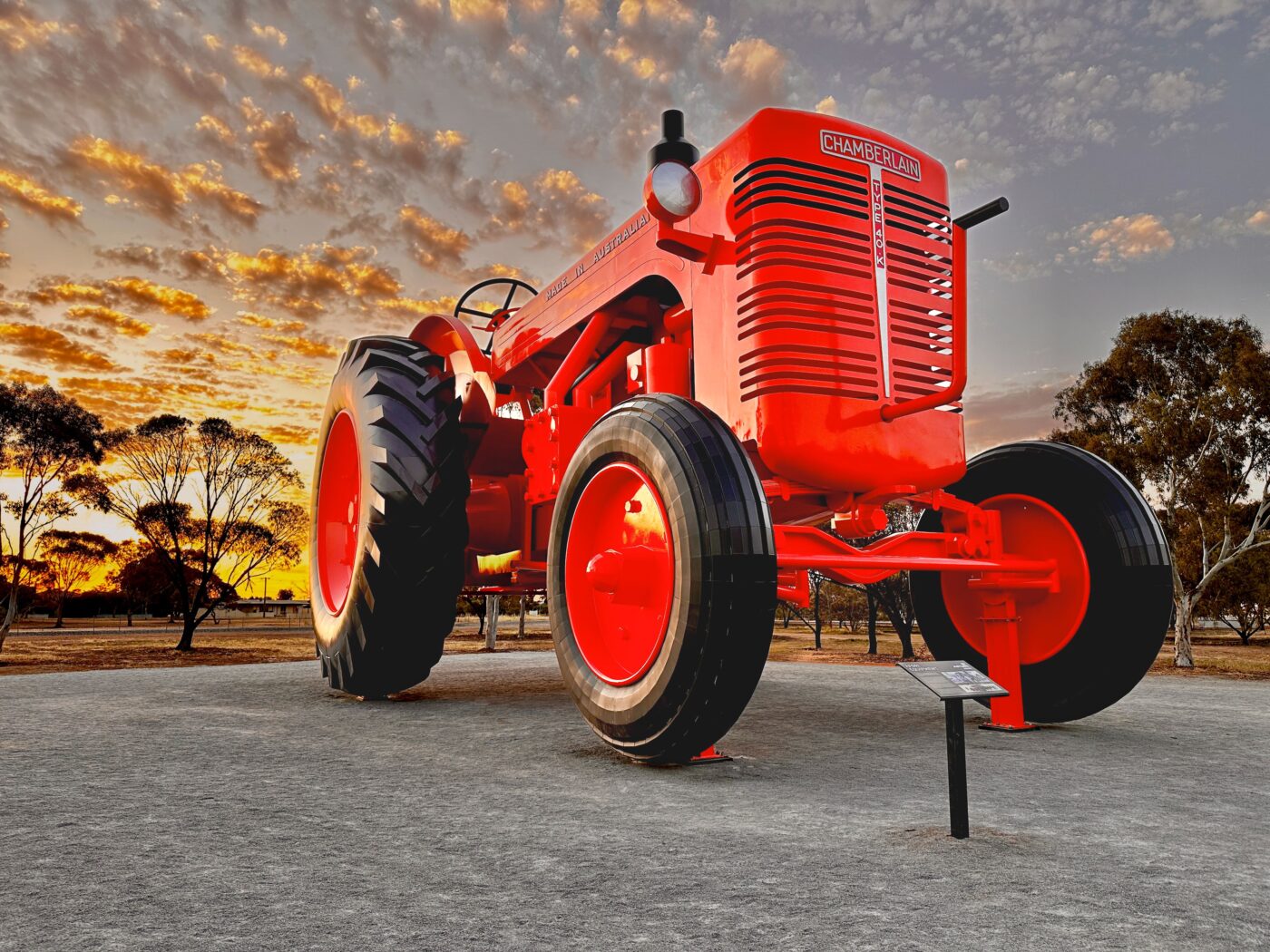
Project Chamberlain takes its name from the famous tractor monument located on Yarra Street in Carnamah. The iconic structure celebrates Western Australia’s rich agricultural heritage and manufacturing history, while recognising the important role the Chamberlain tractor played in the development of farming communities across the State following the Second World War.
The monument is a five-times scale replica of the Chamberlain 40K — the first tractor manufactured in Western Australia in 1949. Standing 11.5 metres high and 16 metres long, the tractor was constructed from 42 tonnes of steel by DIAB Engineering in Geraldton.
The region has a long history of farming, dating back to the early 1900s, and remains a hub for agricultural enterprises. Its resilience and adaptability make it well-suited to hosting renewable energy projects that can integrate seamlessly with the existing landscape. The area's strong agricultural base underscores the potential for renewable energy to support local industries while diversifying the economy.
The Chamberlain Wind Farm is comprised of land owned by many local farmers, some of whom have farmed here for many decades. Encompassing over 40,000 hectares of land, the project has a wind resource that is world class and capable of generating over 1 Gigawatt of energy capacity.
One of Project Chamberlain’s strategic advantages is its proximity to planned upgrades to the South West Interconnected System (SWIS) transmission network. These improvements will enable efficient energy integration, making the project a key contributor to Western Australia’s renewable energy goals.
By combining renewable energy development with respect for the region’s agricultural heritage and natural environment, Project Chamberlain aims to deliver long-term environmental and economic benefits. This project represents a practical step toward a cleaner energy future, supporting local communities and industries while contributing to the broader transition to renewable energy.
Zeff Energy has been measuring the wind resource at the Chamberlain Wind Farm site since mid-2024. Wind speeds are recorded using a combination of SoDAR, LiDAR and meteorological masts positioned across the project area. Several SoDAR and LiDAR units are already in place.
Accurate wind measurement is essential to the successful design and operation of a wind farm. The data helps determine the most suitable turbine locations, the optimal turbine type and size, and predicts the project’s future energy output. It also identifies the times of day when generation is highest. Chamberlain has a steady wind resource, being strongest overnight, perfectly complementing solar generation by producing more power when the sun goes down.
Community engagement
Zeff has developed this project through an open and transparent process of communication and engagement with both the local community and government.
The most important community stakeholders in the Project are landholders who will ultimately host all wind turbines and other project infrastructure. Zeff has maintained regular and ongoing communication with all Project landholders to ensure they are kept up to date as the Project moves through its development cycle and to understand any concerns that may arise. Landholders are overwhelmingly supportive of the Project and are in fact very eager to see it proceed.
Engagement with the Shire of Carnamah has been ongoing since the establishment of the project and Zeff also maintains an ongoing dialogue with State Government entities, such as Powering WA and DMIRS.
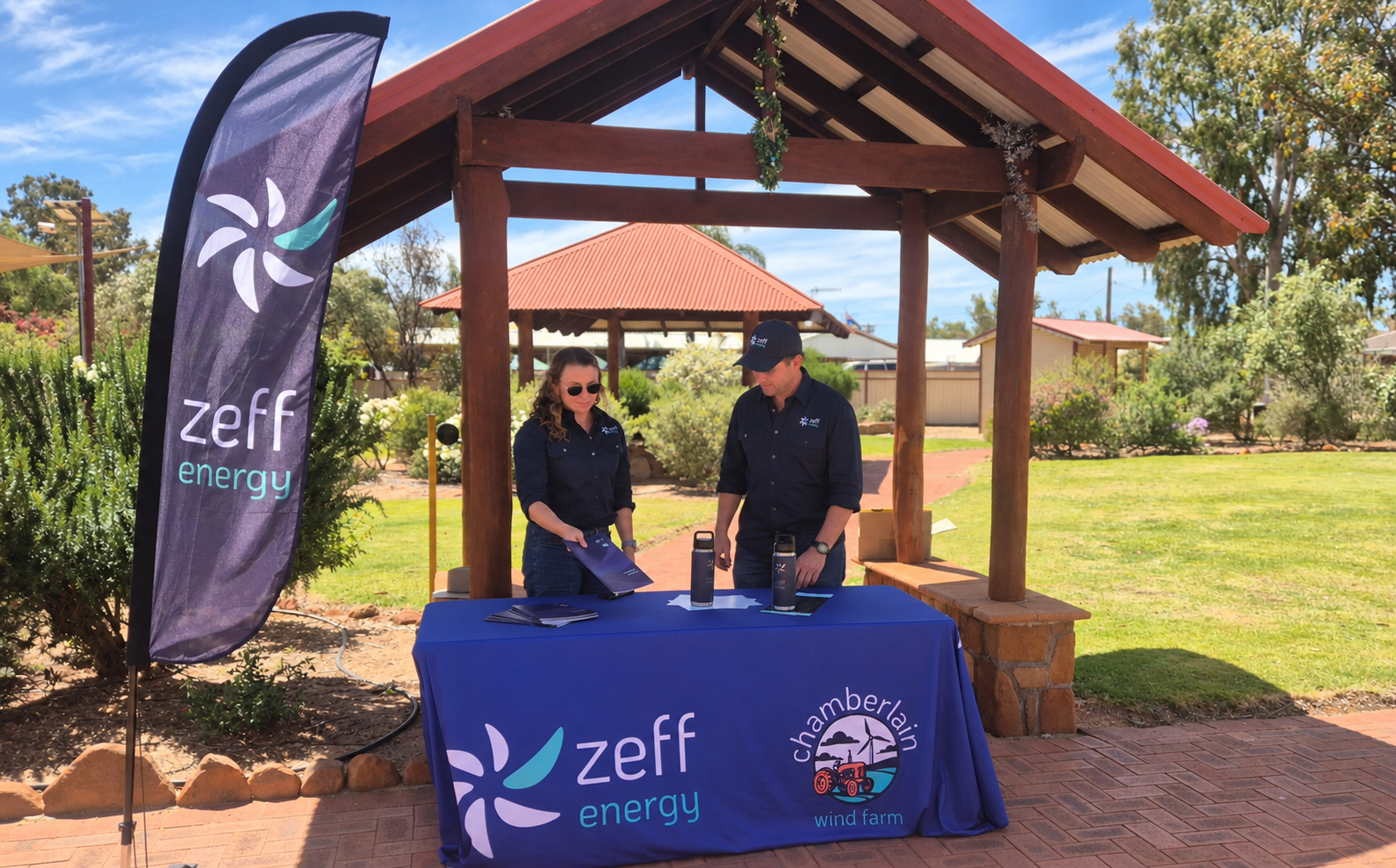
In October 2025, Zeff conducted community consultation sessions in the towns of Carnamah and nearby Coorow, issuing pamphlets and maps to help local people understand the project and provide their input to its development.
You can find out more about the project and have your say by clicking the link below.
Zeff believes the local community is supportive of the wind farm because of its potential to create local jobs, upgrade roads, and generate new income streams for participating landowners. Zeff also supports regional communities through sponsorships, partnerships and local contracting where possible. Zeff is committed to the establishment of a community contribution program. This financial contribution will be required to be allocated to local projects and organisations to support community development.